
If you owned a 2004–2009 Prius, you probably knew — or eventually learned — that the hybrid battery was a matter of when, not if. It took years for that understanding to become common knowledge, but it’s now well-established: the Gen 2 HV battery is a scheduled chapter in the life of that car, not a surprise.
Here’s what made Gen 2 owners accept that reality: they believed it was the major repair the car would ever need. You budget for a battery replacement, and then you’re done.
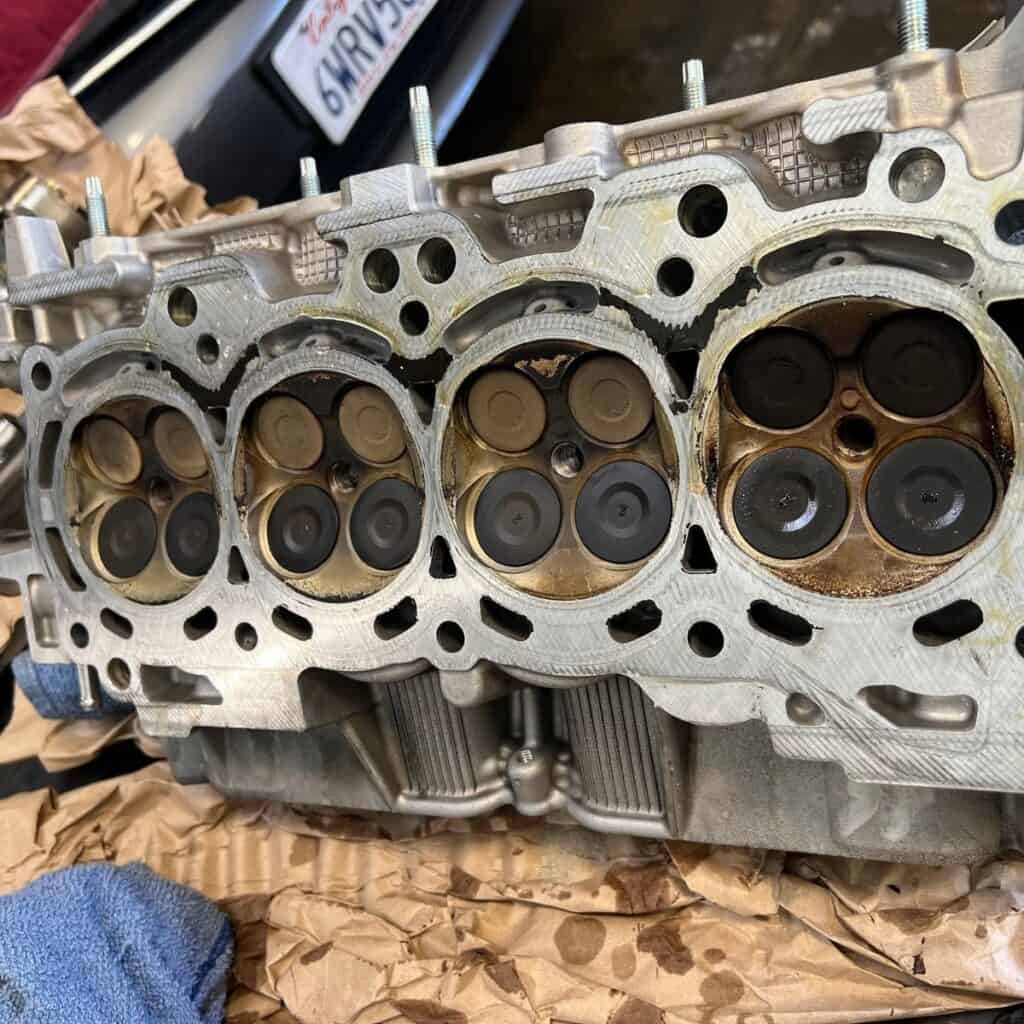
The Gen 3 Prius is different. We’re seeing evidence that owners will face both the hybrid battery replacement and a head gasket repair — often with the head gasket arriving first. And we have the data to show why that’s becoming inevitable for this generation.
What Our Repair History Shows
Earthling Automotive has been servicing Prius vehicles since 2007. We operate two shops in San Francisco, and across both we have a combined 25,772 repair orders on Gen 2 and Gen 3 Prius vehicles — 16,636 on the 2004–2009 generation and 9,136 on the 2010–2016 generation with the 1.8-liter 2ZR-FXE engine.
That’s enough data to see patterns. The pattern we’re observing on Gen 3 head gaskets looks very familiar.
Gen 2 Prius: The HV Battery Baseline
The second-generation Prius hybrid battery failure is the gold standard for “platform-wide inevitable repair.” These cars are now 17–22 years old. The ones still on the road have almost universally needed a battery replacement, a reconditioning, or at minimum a diagnostic related to HV battery health.
In our Gen 2 repair records:
- 16,636 total repair orders on 2004–2009 Prius at our two shops
- 1,472 ROs (8.8%) where technician notes mention the HV battery — diagnostics, health checks, failure documentation, replacement discussions
- 530 ROs (3.2%) where an HV battery service was actually performed — replacement or reconditioning
The 3.2% service rate doesn’t mean only 3.2% of Gen 2 Prius needed a battery. It means 3.2% of all visits to our shop on those vehicles resulted in a battery service. Many of those cars came in for a battery job and never returned. Many others had their battery addressed elsewhere. The visit-based rate significantly understates the true vehicle-level failure rate — which, based on our experience, approaches near-universality on cars past 150,000 miles.
Gen 3 Prius: The Head Gasket Trajectory
Now look at the Gen 3 numbers on head gasket:
- 9,136 total repair orders on 2010–2016 Prius/CT200h at our two shops
- 318 ROs (3.5%) where technician notes explicitly mention head gasket
These are younger cars. The 2010 model year is now 15 years old; the 2016 is only 9. The fleet hasn’t fully aged into the failure zone yet — our four-shop dataset with Travis at Atomic Auto in Portland shows the peak failure window is 150,000–200,000 miles, and a meaningful portion of Gen 3 vehicles haven’t reached it.
Yet the head gasket already appears in 3.5% of our Gen 3 visit notes. On a fleet that isn’t done failing.
The Curve, Not Just the Number
The percentages — 8.8% vs. 3.5% — actually tell us something useful. They let us measure where each failure mode sits on its own timeline.
The Gen 2 HV battery failure rate started low and built gradually as cars aged past 100,000 miles, then accelerated sharply past 150,000. By the time those cars reached 15+ years old, the rate had become so high that we could say: essentially all Gen 2 Prius will need this repair.
We’re watching a similar trajectory build on Gen 3 head gaskets. The 3.5% note mention rate on a fleet that’s still maturing — combined with our confirmed failure distribution that peaks between 150k and 200k miles — tells us we’re early in the curve. Gen 3 vehicles haven’t aged into their peak failure window yet. A meaningful portion haven’t reached 150,000 miles.
Yet we’re already seeing head gasket repairs at a steady rate. If this follows the Gen 2 battery pattern, that percentage will climb as the fleet ages. The data from our four-shop dataset suggests we should expect to see head gasket failure become as common on Gen 3 cars as HV battery failure is on Gen 2 — essentially inevitable for cars past a certain mileage threshold.
Here’s what makes that pattern significant: the Gen 3 head gasket is not a replacement for the HV battery failure. It’s an addition to it. Gen 3 owners will face both repairs, often within overlapping mileage windows. Unlike Gen 2, where owners mentally prepared for one major repair, Gen 3 owners are looking at two — and the head gasket typically arrives first.
Why This Matters for How You Think About Your Car
The Gen 2 HV battery taught the Prius community something important: a significant repair doesn’t mean the car’s useful life is over. Owners who replaced their batteries at 150,000 or 180,000 miles often drove those cars another 100,000 miles or more. The repair was a known cost, but not the end of the vehicle’s value.
The Gen 3 data suggests a similar pattern is emerging — except Gen 3 owners will face two major repairs instead of one. The head gasket and HV battery represent sequential or overlapping maintenance windows, typically in the 130,000–220,000 mile range. That’s a different ownership profile than Gen 2, but not necessarily a dealbreaker.
A Gen 3 Prius that receives proper diagnosis and repair work — correct head gasket repair followed eventually by HV battery service — continues to be a reliable, fuel-efficient vehicle well past 250,000 miles. The question isn’t whether the car becomes unreliable after these repairs. It’s whether the total cost of maintaining it is worth the remaining vehicle life.
What the data suggests you should monitor:
- Under 130,000 miles: Establish a routine for checking coolant level. Familiarize yourself with what cold-start misfires sound like — rough idle that clears after 10–15 seconds. Track this so you can recognize it if it develops.
- 130,000 to 200,000 miles: You’re in the window where head gasket failures become more common. If you notice cold-start symptoms, coolant loss, or white exhaust smoke, diagnosis is worth pursuing rather than delaying.
- If you’ve been quoted for a head gasket: Verify the diagnosis with a pressure test that confirms coolant presence in the cylinder. Confirm the shop has ruled out EGR cooler failure, which produces similar symptoms. Understanding what you’re actually dealing with helps you make informed decisions about repair.
We’re Here to Help You Think It Through
We’ve been watching this platform since the Gen 2 was new. We saw the HV battery failure rate build. We’re watching the head gasket failure rate build now. If you have questions about where your car stands, or you’re trying to decide what to do with a diagnosis you’ve already received, call or text us at (415) 875-9030. We’re at 615 Bayshore Blvd in San Francisco, Monday through Friday, 8am to 5pm, and you can always reach us at earthlingauto.com.